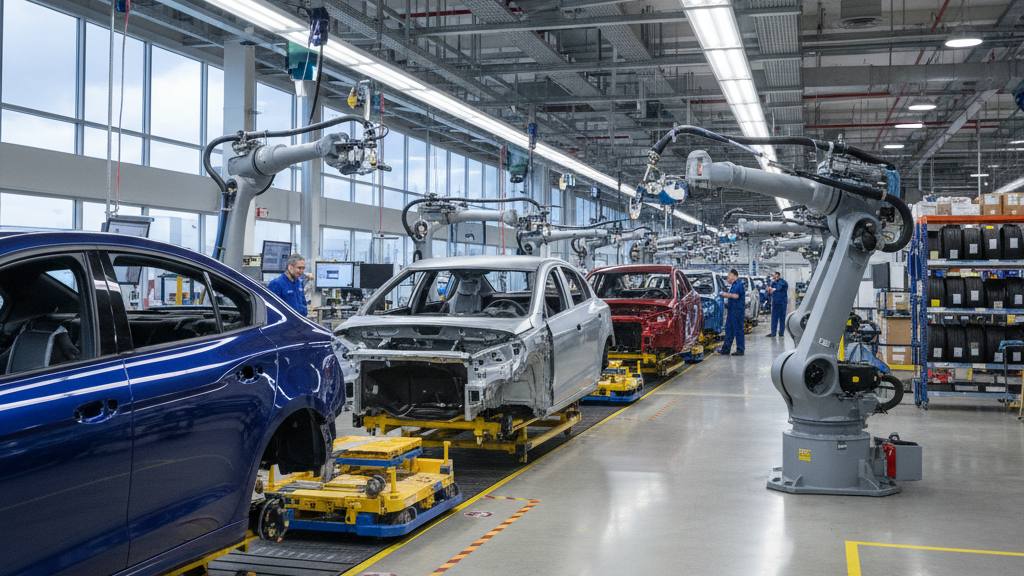
Forget what you know about the auto industry. The real innovation isn’t just under the hood anymore—it’s in the cloud, on the factory floor, and right in the palm of your hand.
For a century, the automotive world ran on a simple, powerful formula: build a great car, market it well, and sell it through a dealership. That era is over. Today, we’re in the midst of a seismic shift, a digital transformation so profound it’s rewriting the entire automotive playbook. The car is no longer just a product; it’s becoming a sophisticated, connected, and personalized experience on wheels.
But with so many buzzwords flying around—AI, IoT, blockchain, mobility-as-a-service—how do you make sense of it all? How do you separate the hype from the real, tangible strategies that are driving the future?
Let’s break it down. To get a clear, comprehensive picture, we’ll use a powerful mental model from the world of top-tier strategy consulting: MECE (pronounced “me-see”), which stands for Mutually Exclusive, Collectively Exhaustive. This means we’ll look at the key strategies in a way that each fits into its own distinct category (no overlaps) and together, they cover the entire landscape (no gaps).
I see the digital transformation in the automotive world falling into three core, game-changing arenas:
- Reinventing the Core Product: Fundamentally changing what a “car” is.
- Transforming Production & the Supply Chain: Radically rethinking how vehicles are designed, built, and delivered.
- Redefining the Customer Experience: Revolutionizing how we buy, own, and interact with our vehicles.
Let’s dive in.
1. Reinventing the Core Product: The Car as a “Computer on Wheels”
The most visible transformation is happening to the vehicle itself. It’s evolving from a piece of mechanical engineering into a software-defined platform, brimming with digital potential.
- The Connected Car is the New Standard: Modern vehicles are packed with sensors and have internet connectivity, turning them into rolling data centers. This constant connection enables a host of new features and business models. Think of it like your smartphone. You don’t buy a new one every time you want a new feature; you just download an app or an update. Carmakers are adopting this with over-the-air (OTA) updates that can enhance everything from infotainment systems to battery performance and even autonomous driving capabilities.
- Autonomous Driving and AI-Powered Assistance: The race to full autonomy is a marathon, not a sprint. But along the way, AI is making driving significantly safer and more convenient. Advanced Driver-Assistance Systems (ADAS) powered by AI are now common, offering features like adaptive cruise control and lane-keeping assistance. These systems are continuously learning, making the vehicle an intelligent co-pilot that helps prevent accidents before they happen.
- Data Monetization and New Revenue Streams: All that data generated by connected cars is incredibly valuable. Automakers are exploring new revenue models like subscription services for premium features, usage-based insurance, and in-car commerce. This transforms the relationship with the customer from a one-time sale to an ongoing service-based partnership.
2. Transforming Production & the Supply Chain: Building the Future, Faster and Smarter
The revolution isn’t just happening on the road; it’s also happening on the factory floor and across the global supply chain. To build the complex vehicles of the future, automakers are embracing a new digital industrial paradigm.
- The Rise of the Smart Factory: The assembly line is getting a major IQ boost. By integrating AI, IoT sensors, and robotics, manufacturers are creating “smart factories” that are more efficient, flexible, and resilient. AI-powered quality control can spot microscopic defects the human eye might miss, while predictive maintenance on factory equipment prevents costly downtime by fixing machines before they break.
- Digital Twins: The Virtual Car Before the Real One: Imagine building, testing, and refining a car in a virtual world before a single piece of metal is stamped. That’s the power of “digital twins.” These are detailed virtual replicas of both the product and the production process. They allow engineers to run simulations and identify potential issues early on, drastically reducing development time and costs.
- Building a Resilient, Agile Supply Chain: Recent global disruptions have shown just how fragile traditional supply chains can be. In response, the industry is using digital tools to create more transparent and intelligent supply chains. AI can now predict potential supplier disruptions, and advanced analytics help optimize inventory levels, ensuring the right parts are in the right place at the right time.
3. Redefining the Customer Experience: From Dealerships to Digital Journeys
Perhaps the most profound shift is in how automakers are connecting with their customers. The old model of relying solely on dealerships is being replaced by a more direct, personalized, and continuous relationship.
- Digital-First Retail: Today’s car buyers often start their journey online. They expect a seamless, omnichannel experience where they can research, configure, and even purchase a vehicle from the comfort of their home. This “digital-first” approach is forcing a reinvention of the traditional dealership, transforming it from a point of sale to a hub for experiences, test drives, and service.
- Hyper-Personalization at Scale: With data from connected cars and digital interactions, automakers can now understand their customers on an individual level. This allows for hyper-personalized marketing, in-car experiences, and service recommendations. Think of a car that automatically adjusts the seats, climate, and infotainment to your preferences as you approach, or a service alert that’s tailored to your specific driving habits.
- The Growth of Mobility-as-a-Service (MaaS): For a growing number of consumers, especially in urban areas, the focus is shifting from owning a car to accessing mobility when needed. This has given rise to Mobility-as-a-Service (MaaS) platforms that integrate various forms of transport—ride-sharing, e-scooters, public transit—into a single, on-demand service. Automakers are increasingly positioning themselves as key players in this new mobility ecosystem.
The Road Ahead
The digital transformation of the automotive industry is no longer a distant vision of the future; it’s happening right now. The companies that will lead this new era are not just building better cars; they are building smarter products, more efficient factories, and deeper customer relationships. They understand that in this new landscape, the vehicle is just one part of a much larger digital ecosystem. The road ahead is clear: the future of driving is digital, and there’s no turning back.
Leave a Reply