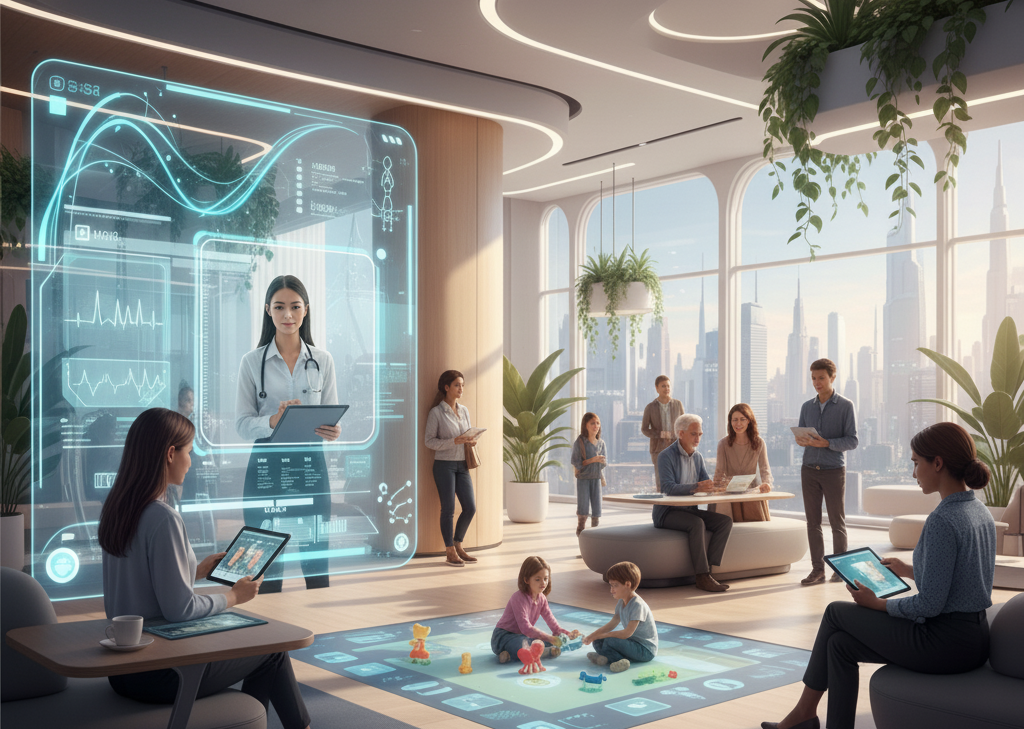
For generations, the defining image of healthcare has been the waiting room. That sterile, quiet space where we sit, wait, and wonder, armed with a clipboard of repetitive questions. It’s a model built on physical presence, episodic care, and reactive treatment. But a seismic shift is underway, one that’s quietly dismantling that old reality and building something far more dynamic in its place.
This isn’t just about new gadgets or software; it’s a fundamental rewiring of healthcare’s DNA. We’re witnessing the long-overdue transition from an industry of “sick care” to a proactive, predictive, and deeply personalized ecosystem of “health care.” Technology is the catalyst, but the goal is profoundly human: to make care more accessible, effective, and centered around the one person who matters most—the patient.
The Clinic is No Longer Just a Building
The pandemic threw telehealth into the spotlight out of sheer necessity, but what began as a crisis response has matured into a cornerstone of modern medicine. The era of virtual care is here, and it’s far more than just a video call with your doctor. It’s about creating a system of ubiquitous care, where your location is no longer the primary barrier to expertise.
Think of the old model like a landline phone. It was fixed, reliable, and served its purpose, but you had to be in a specific place to use it. Today’s virtual care platforms are the smartphones of medicine. They untether us, creating an entire ecosystem of possibilities. This includes remote patient monitoring (RPM), where data from connected devices—like smart blood pressure cuffs or glucose monitors—flows directly to care teams, allowing them to intervene before a problem escalates. For patients managing chronic conditions or those living in rural areas, this shift is nothing short of revolutionary. It transforms care from a series of isolated appointments into a continuous, connected conversation.
AI: Your Doctor’s New Super-Powered Partner
If there’s one technology acting as the main engine of this transformation, it’s artificial intelligence. AI in healthcare isn’t about replacing doctors; it’s about augmenting them, giving them super-powered tools to see more, know more, and do more.
Imagine a radiologist analyzing a complex scan. They have years of training and invaluable intuition. Now, give them an AI partner that has been trained on millions of similar images. This AI can flag subtle anomalies the human eye might miss, acting as the ultimate second opinion. Studies have already shown AI systems achieving detection rates for tumors that are comparable to, and sometimes even better than, those of experienced radiologists.
This partnership extends across the healthcare landscape:
- Predictive Analytics: AI is becoming healthcare’s early warning system. By analyzing vast datasets from electronic health records (EHRs), wearables, and even genomic information, machine learning models can predict which patients are at high risk for conditions like sepsis, diabetes, or heart disease. This allows providers to move from reactive treatment to proactive, preventive intervention.
- Personalized Medicine: AI can analyze a person’s unique genetic makeup and lifestyle to help clinicians tailor treatment plans with incredible precision. It’s the end of one-size-fits-all medicine and the dawn of treatments designed for an audience of one.
- Streamlining Operations: Behind the scenes, AI is optimizing hospital workflows, predicting patient admission spikes, automating tedious administrative tasks, and even accelerating the painfully slow process of drug discovery.
Your Body as a Real-Time Data Stream
For decades, your health record was built on sporadic snapshots in time: an annual physical, a blood test, a visit to the ER. It was like trying to understand a river by taking a single photograph of it once a year.
The Internet of Medical Things (IoMT) and wearable devices have turned that snapshot into a live, flowing stream of data. Smartwatches, continuous glucose monitors, smart inhalers, and even smart implants are providing a constant feed of vital signs and biometric data.
This real-time information is a game-changer for managing chronic diseases. Instead of relying on a patient’s memory of their symptoms over the past few months, a clinician can see the data—how their heart rate changed during exercise, how their blood sugar fluctuated after a meal—and make far more informed decisions. It empowers patients to become active participants in their own health and provides clinicians with the complete picture they’ve always needed.
The Patient Is Finally in the Driver’s Seat
For too long, healthcare has been an industry where the customer experience came last. We’ve become accustomed to seamless, on-demand digital experiences from retail, banking, and entertainment, yet healthcare often remained stuck in a world of phone calls and paper forms.
That’s finally changing with the rise of the “digital front door.” This concept is about creating a unified, intuitive digital entry point for patients to manage their entire healthcare journey. It encompasses a whole suite of tools:
- Online appointment scheduling
- Patient portals with access to lab results and medical records
- Mobile apps for registration and payments
- Secure messaging with care teams
- Telehealth platforms
By giving patients these tools, healthcare organizations are not just improving convenience; they’re boosting engagement, improving communication, and building loyalty. When patients are empowered with information and control, they become more active partners in their care, leading to better adherence to treatment plans and, ultimately, better outcomes.
The Unseen Challenge: Fortifying the Digital Fortress
Of course, this explosion of digital health data creates a massive target for cyber threats. Ransomware and phishing attacks have become distressingly common in the healthcare sector, where the stakes—patient safety and privacy—could not be higher.
Strengthening cybersecurity is not just a trend; it is a non-negotiable imperative. Healthcare organizations are investing heavily in multi-layered security measures, from advanced encryption to zero-trust architecture, to protect sensitive patient information. As we build this interconnected, data-driven future, building an unshakable foundation of digital trust is paramount.
The waiting room isn’t going away entirely, but its role as the central hub of healthcare is fading. In its place, we’re building a system that is decentralized, data-rich, and deeply human. This transformation is about more than just technology; it’s about a new promise. It’s the promise of a future where care finds you when and where you need it, where we can predict and prevent illness instead of just reacting to it, and where every patient is empowered to be the CEO of their own health. The reinvention is here, and it’s just getting started.
Leave a Reply